Tulsa Oklahoma Has the Most Compelling Cost of Living of Any Major U.S. City — Here Are the Numbers
When people first hear 'Tulsa, Oklahoma' they don't always picture the life they're about to find there.
Then they see the numbers.
And the conversation changes completely.
If you're relocating from a high-cost market — California, Colorado, Texas, Illinois, the Northeast — what Tulsa offers isn't just affordable. It's a genuine lifestyle upgrade that most people don't believe is possible until they're living it.
Here's an honest, direct comparison of what your money actually buys in Tulsa versus the cities people are most commonly leaving.
Tulsa vs. Austin, Texas
Austin has been one of the most talked-about relocation destinations of the past decade. It also became one of the most expensive mid-size cities in the country in the process.
The median home price in Austin now sits well above $500,000 — and in many desirable neighborhoods, you're looking at $600,000 to $800,000 for a standard 3–4 bedroom home. Property taxes in Texas are famously high, regularly running 2.1% to 2.5% of assessed value annually. There's no state income tax, but that property tax burden more than offsets it for homeowners.
In Tulsa, that same 3–4 bedroom home in a desirable area — good schools, established neighborhood, updated finishes — runs $280,000 to $450,000. Oklahoma's property tax rates are among the lowest in the nation. And Oklahoma's state income tax, while it exists, is modest and offset significantly by the overall lower cost basis.
The bottom line: a household earning $150,000 remotely lives materially better in Tulsa than in Austin. More house. Lower taxes. Less financial pressure. More breathing room.
Tulsa vs. Denver, Colorado
Denver attracts people with its outdoor lifestyle and mountain access. It also comes with a price tag that has climbed sharply over the past ten years.
Median home prices in Denver hover around $550,000 to $600,000. Competition is fierce, inventory is tight, and the cost of simply maintaining a home at altitude adds up. Colorado has a flat state income tax of 4.4%. Combined with property taxes and the general cost of living, Denver is not a cheap city to call home.
Tulsa sits at roughly half the home price of Denver for comparable square footage and quality. If mountain access is non-negotiable for your lifestyle, Denver makes sense. If what you actually love about Denver is the quality of life, the community, the outdoors, and a real sense of place — Tulsa delivers more of that per dollar than almost anywhere in the country.
The Gathering Place alone — a world-class 100-acre riverfront park — is the kind of civic investment that cities three times Tulsa's size don't always have.
Tulsa vs. Nashville, Tennessee
Nashville is another city that has seen its cost of living surge alongside its cultural profile. No state income tax made it attractive. Then everyone moved there.
Median home prices in Nashville now exceed $450,000 to $500,000, with desirable neighborhoods pushing significantly higher. Traffic has worsened considerably as infrastructure has struggled to keep pace with population growth. The city's character — the thing that made people want to move there — has become harder to access as prices pushed long-time residents and authentic neighborhoods outward.
Tulsa offers what Nashville used to offer: a real city with a genuine arts and music culture, walkable neighborhoods, excellent dining, and a strong sense of community — at prices that haven't been inflated by a decade of relocation hype. The Brady Arts District, the Blue Dome District, the Tulsa Arts District — these are authentic, not manufactured.
Tulsa vs. Phoenix, Arizona
Phoenix positioned itself as an affordable Sun Belt alternative for years. That window has largely closed.
Median home prices in Phoenix are now above $400,000, summer utility costs from extreme heat add meaningfully to monthly expenses, and water scarcity is an increasingly serious long-term concern that affects both livability and property values.
Tulsa has four genuine seasons — including summers that are warm but not the sustained 110-degree heat that defines Phoenix from June through September. Utility costs are manageable. Water is not a concern. And the home price advantage over Phoenix has grown meaningfully in recent years as Phoenix appreciation outpaced the rest of the country.
Tulsa vs. Chicago, Illinois
Chicago offers world-class culture, architecture, and a genuine big-city energy that is hard to replicate. It also carries some of the highest property taxes in the country, a state income tax of 4.95%, and a cost of living that makes it difficult for middle-income households to build wealth while living well.
Many Chicago-area families relocating to Tulsa describe the experience as finally being able to afford the life they'd been working toward. More space. A yard. A better school district. A manageable commute. And money left over at the end of the month.
The Tulsa metro — including Bixby, Broken Arrow, Jenks, Owasso, and Sapulpa — offers genuine suburban quality of life that competes with the best Chicago suburbs at a fraction of the cost.
The Honest Part: What Tulsa Doesn't Have
An honest comparison requires honesty in both directions.
Tulsa doesn't have the density or walkability of Chicago or a major coastal city. If you need to walk everywhere and live without a car, Tulsa is going to challenge you. It is a car city, and most residents drive daily.
Tulsa doesn't have the mountain access of Denver or the beach proximity of coastal markets. If those are non-negotiables for your lifestyle, that matters.
The restaurant and cultural scene, while genuinely good and growing, is not comparable in breadth to a city of 3 to 5 million people. You will occasionally drive to find the specific thing you're looking for.
And Oklahoma summers are hot. Not Phoenix hot — but consistently in the 90s from June through August, with humidity. That's a real consideration.
What Tulsa offers in return for those trade-offs is a quality of life that is increasingly difficult to find: space, community, financial stability, and a city that is genuinely investing in its future. For a growing number of relocation buyers, that trade-off is exactly right.
What Your Money Actually Buys in the Tulsa Metro
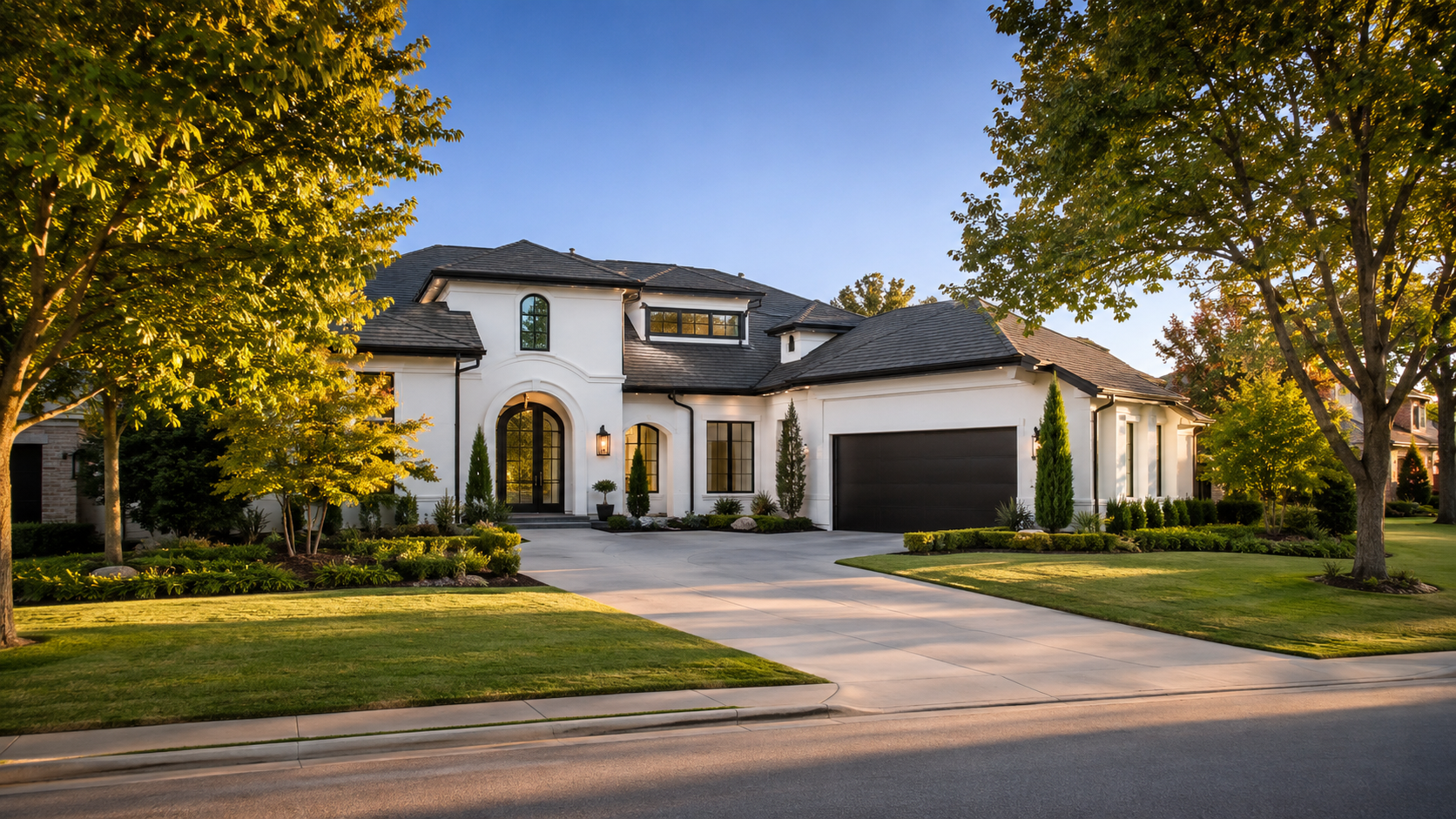
To make this concrete: a household budget of $400,000 for a home purchase in Tulsa buys a 4-bedroom, 2–3 bathroom home in an established neighborhood with good schools — in Bixby, Broken Arrow, Jenks, Owasso, or South Tulsa — with a two-car garage, a real backyard, and modern finishes.
That same $400,000 in Austin buys a small townhome. In Denver, a dated 3-bedroom in a less desirable area. In Nashville, a starter home in an outer suburb. In Chicago's better suburbs, not much at all.
The math is not subtle. It is dramatic.
Making the Move: What to Know Before You Search
Relocation buyers have specific needs that local buyers don't. You're navigating an unfamiliar market, often from a distance, often under time pressure, and without the local knowledge that comes from years of watching neighborhoods evolve.
I work specifically with relocation buyers across Tulsa, Bixby, Broken Arrow, Jenks, Owasso, Sapulpa, and the greater Tulsa metro. I handle every transaction personally — no handoffs, no assistants managing your file midway through. You work with me from the first search through closing day.
As a Master Certified Negotiation Expert — top 5% nationally — I know how to position relocation buyers competitively in a market they're learning in real time. And through the Allways Home Support™ program, my clients stay supported long after the keys are in hand — with access to a moving truck, tool shed, BenefitHub savings, and a vetted network of local professionals.
If the numbers brought you here, let's find the right home to match them.
Sabrina Shaw
Tulsa Oklahoma Realtor | Allways Realty Group — brokered by eXp Realty
Specializing in relocation clients, luxury homes, new construction, and move-up buyers across Tulsa, Bixby, Broken Arrow, Jenks, Owasso, Sapulpa, and surrounding areas.
With over 160 homes closed and $55M+ in sales volume, Sabrina is a top 10% agent in the Tulsa MLS and a Master Certified Negotiation Expert (top 5%), known for strategic pricing, strong contract management, and a modern digital marketing approach.
Her clients become clients for life through the Allways Home Support™ program offering continued access to a moving truck, tool shed, BenefitHub savings, and a trusted network of professionals long after closing.
📞 918-637-7826
🌐 sabrinashawtulsarealtor.com