Why Tulsa Is the Best City for Remote Workers in the South
The question stopped being "where is my office?"
And started being "where do I actually want to live?"
For a lot of people — especially those paying $3,500 a month for a one-bedroom in a city they don't even love anymore — that question opened a door they hadn't expected.
And behind that door, for more and more remote workers, is Tulsa, Oklahoma.
I want to tell you why. Not the headline version. Not the press release. The real version — from someone who helps people make this move every single week and sees what happens when they do.
The Remote Work Revolution Changed Everything — And Tulsa Was Ready
Tulsa didn't just stumble into this moment.
It prepared for it.
The Tulsa Remote program — one of the first and most recognized remote worker incentive programs in the country — put Tulsa on the national map years before remote work became mainstream. The program offered cash incentives to remote workers who relocated to Tulsa, and it worked. Thousands of educated, talented, income-earning professionals moved here and built lives.
But here's what matters more than the program itself.
What those people found when they arrived.
They found a city that was genuinely ready for them. Reliable high-speed internet infrastructure. A growing community of other remote workers and entrepreneurs. Coworking spaces. A food and arts scene that surprised people who expected less. And a cost of living that made everything else possible.
The program may have been the invitation.
But Tulsa itself was the reason people stayed.
The Cost of Living — The Most Powerful Argument for Tulsa
Let me be direct about something.
For remote workers, cost of living isn't just a financial metric. It's a quality-of-life multiplier.
When you're earning a salary designed for San Francisco or New York or Chicago — and you move to Tulsa — your entire financial life changes.
Here's what that actually looks like:
Housing The average home price in Tulsa is a fraction of what you'd pay in most major metros. A $400,000 home in Tulsa is a genuinely beautiful, spacious property in a great neighborhood. In Austin or Denver, that same budget might get you a small condo in a mediocre location.
For remote workers who've been renting forever because ownership felt impossible in their current city — Tulsa is often the first place where homeownership stops being a distant dream and becomes an actual plan.
Day-to-Day Life Groceries. Utilities. Restaurants. Car insurance. Property taxes. Every single category of daily expense is lower in Tulsa than in the cities most remote workers are leaving.
The math isn't subtle. A remote worker earning $120,000 a year in San Francisco is effectively much poorer than a remote worker earning the same salary in Tulsa. The numbers on the paycheck are the same. What those numbers actually buy is completely different.
The Freedom It Creates This is the part that matters most.
When you're not spending 60% of your income on housing, you have choices. You can save. You can invest. You can take the trip. You can work fewer hours. You can build the life you've been deferring.
That's what Tulsa gives remote workers that most cities don't — not just affordability, but actual financial freedom.
The Home Office Reality — What Remote Workers Need and Tulsa Delivers
Remote workers don't just need a city. They need a home.
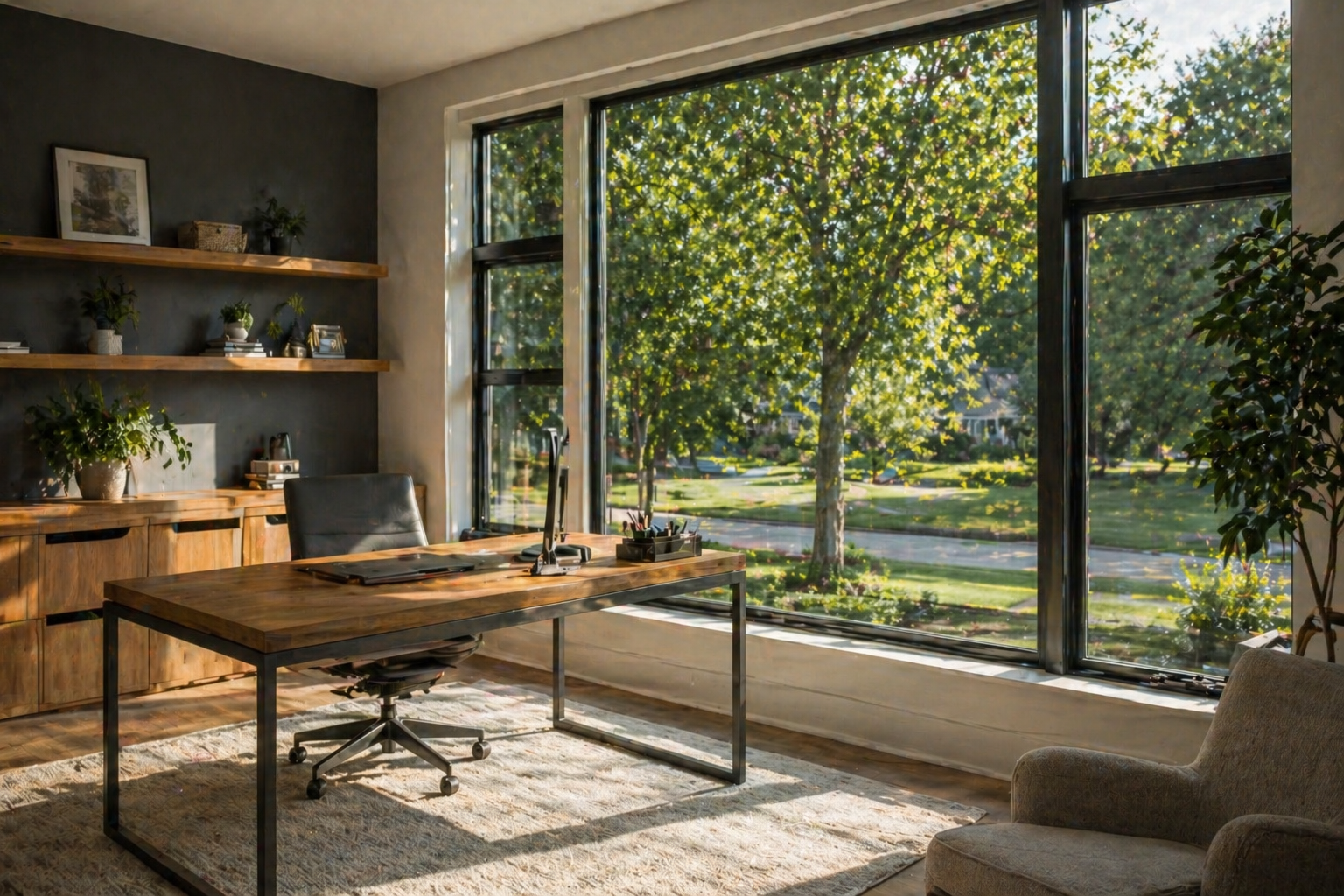
Specifically — they need space. Real space. The kind of space where you can have a dedicated home office that doesn't also function as your dining room and your bedroom.
In most major metros, that kind of space is either unaffordable or simply unavailable.
In Tulsa, it's the norm.
At $350K–$500K in the greater Tulsa area, you're getting homes with dedicated office spaces, multiple bedrooms, real square footage, and outdoor spaces where you can decompress between calls. The kind of home that makes remote work genuinely sustainable rather than a daily exercise in managing a cramped apartment.
I've worked with remote workers who moved from studio apartments in Brooklyn or one-bedrooms in Seattle — and watching them walk through a Tulsa home for the first time is one of my favorite parts of this job.
The quiet that settles over them. The slow realization of what's possible here.
That moment is real. And it happens over and over.
The Internet Infrastructure — Fast, Reliable, and Everywhere
This is the practical question every remote worker asks first. And it's the right question.
Tulsa has invested significantly in broadband infrastructure. High-speed fiber internet is available across the metro and in most of the surrounding suburbs. The coworking space ecosystem has grown significantly — for remote workers who want a dedicated workspace outside the home, options exist across the city.
The digital infrastructure that remote work requires is here. It's not something you have to hope for or research anxiously. It works.
The Lifestyle — The Part That Keeps People Here
Here's what surprises most remote workers who make the move.
They came for the financial reasons. They stayed for the life.
Because Tulsa has more going on than most people expect before they arrive.
The Food Scene Tulsa's restaurant scene has developed into something genuinely impressive. Farm-to-table dining. James Beard-recognized chefs. A diversity of cuisines and price points that serves both the casual Tuesday night dinner and the special occasion.
The Arts and Culture Tulsa has a legitimate arts district — the Tulsa Arts District — with galleries, live music venues, and cultural events year-round. The Bob Dylan Center. The Woody Guthrie Center. A music heritage that runs deep. For remote workers who moved from cities with strong cultural scenes and worried about losing that — Tulsa holds up better than expected.
The Outdoor Access The Tulsa metro is surrounded by lakes, state parks, and trail systems that outdoor-oriented remote workers consistently love. Keystone Lake. Oologah Lake. The Arkansas River trails. For people who want to close the laptop on a Friday afternoon and actually get outside — it's all right there.
The People Tulsa has always had a genuine community culture. But the influx of remote workers over the past several years has added something additional — a growing population of educated, entrepreneurial, lifestyle-conscious people who chose to be here. That changes the social fabric of a city. And in Tulsa, it's been a real positive.
The Best Neighborhoods for Remote Workers in Tulsa
Where you land in Tulsa matters — especially for remote workers who may be spending more time at home than the average commuter.
Here's a quick breakdown of where remote workers tend to thrive:
Midtown Tulsa The most walkable, most urban option in the metro. Close to the arts district, great restaurants, and the kind of neighborhood energy that makes working from home feel less isolating. Best for remote workers who want some city texture in their daily life.
South Tulsa Quieter, more established, with beautiful homes and excellent access to the broader metro. Strong choice for remote workers who prioritize a peaceful work environment and don't need to be close to the urban core every day.
Bixby For remote workers with families — or those who want the best new construction and top school zones — Bixby offers an elevated lifestyle that's still within easy reach of everything Tulsa offers.
Jenks Riverfront living with a charming community feel. Great for remote workers who want a beautiful environment to come home to after the workday ends.
Broken Arrow Space, safety, and some of the strongest value in the metro. Excellent for remote workers who want a larger home, more land, and a quieter daily environment.
The Honest Trade-Offs — Because I Always Give You Both Sides
It's car-dependent. Outside of Midtown Tulsa, you'll need a car for most of daily life. There's no meaningful public transit across the metro. For remote workers who got rid of their car in a walkable city, this is a real adjustment.
It's not a major metro. Tulsa is a real city with real culture — but if you need the scale of New York, Los Angeles, or Chicago, this is a genuinely different experience. The energy is calmer. The pace is slower. For most remote workers, that's exactly what they were looking for. But it's worth being honest about.
The weather is Oklahoma weather. Storms. Heat. Occasional ice. The full Oklahoma seasonal experience applies here. Most remote workers adapt — and many find they actually enjoy the dramatic seasons after years of mild coastal weather.
Social circles take time to build. Moving to a new city as a remote worker — without an office to walk into — means building your social life more intentionally. Tulsa has the infrastructure for it: coworking spaces, community events, a growing remote worker community. But it requires effort. It doesn't happen automatically.
Is Tulsa the Right Move for You?
If you're a remote worker who wants:
- Financial freedom that your current city won't give you
- A real home with a real home office at a price that actually works
- A genuine lifestyle — food, culture, outdoors, community — without the chaos
- A slower, more intentional pace that makes the work sustainable
- The ability to actually build wealth instead of just covering rent
Then Tulsa deserves to be at the top of your list.
I'd love to help you think through whether it's the right fit — neighborhood by neighborhood, budget by budget, lifestyle by lifestyle.
Not a pitch. Just a real conversation.
Because the right move isn't just about where you can afford to live.
It's about where you actually want to.
📞 918-637-7826 📧 sabrinashaw@allwaysrealtygroup.net 🌐 sabrinashawtulsarealtor.com
Sabrina Shaw Tulsa Oklahoma Realtor | Allways Realty Group — brokered by eXp Realty
Specializing in relocation clients, luxury homes, new construction, and move-up buyers across Tulsa, Bixby, Broken Arrow, Jenks, Owasso, Sapulpa, and surrounding areas.
With over 160 homes closed and $55M+ in sales volume, Sabrina is a top 10% agent in the Tulsa MLS and a Master Certified Negotiation Expert (top 5%), known for strategic pricing, strong contract management, and a modern digital marketing approach.
Her clients become clients for life through the Allways Home Support™ program offering continued access to a moving truck, tool shed, BenefitHub savings, and a trusted network of professionals long after closing.